JOKERTRICKSENTER STAGE
Joker Tricks neon stage with three performers above the reels
Joker Tricks game logo

The official feature set names Pin, Win, Pile, Collector, Wild and Instant Pays. These labels describe the toolbox behind the character performances: symbols can remain in position, contribute direct values, build grouped outcomes or interact with a collector during feature play.

OPEN JOKER TRICKS
4×5 GRID1024 WAYSx1800 MAX
JINXIEJESTLUNAPIN · WIN · PILE · COLLECTOR

TONIGHT'S PERFORMANCE

Special Symbols

The official feature set names Pin, Win, Pile, Collector, Wild and Instant Pays. These labels describe the toolbox behind the character performances: symbols can remain in position, contribute direct values, build grouped outcomes or interact with a collector during feature play.

A 4×5 grid provides twenty visible symbol positions and 1024 ways. The wider symbol field supports persistent, collecting and value-based effects without requiring the character portraits to overlap the reel area. Result animation can emphasize participating positions, then return the screen to a neutral state where the next token or performer change is easy to identify.

ACT 01

A Neon Theatre Built Around Three Performers

The game’s identity comes from the relationship among characters, tokens and special symbols. Jinxie, Jest and Luna are not separate decorative mascots placed over unrelated mechanics. Their colour states organize token progress, their activation count defines the feature tier, and their tricks determine which special-symbol behaviours appear during Free Games or Triple Games.

For Pin, Win, Pile, Collector, Wild and Instant Pays, the important detail is visible in the stage hierarchy. Each performer commands a colour and gathers associated tokens. The interface can communicate progress through illumination, movement and the change from a dormant portrait to an active performance. Because each colour belongs to one character, the user can connect a reel event with Jinxie, Jest or Luna before the feature transition is complete.

ACT 02

How the 4×5 Grid Supports Feature Play

The visual structure separates the game into a performer layer and a reel layer. Jinxie, Jest and Luna occupy distinct colour-coded positions above the grid, while four rows and five reels handle symbols below. This arrangement allows character status to remain visible during ordinary outcomes and gives the interface a clear place to show token collection before a feature begins.

For Pin, Win, Pile, Collector, Wild and Instant Pays, the important detail is visible in the stage hierarchy. Feature scale depends on how many performers wake. One active character begins Free Games around one trick. Two characters mix their abilities, creating a combined sequence. When all three activate together, Triple Games brings every special symbol system onto the stage. The progression is easy to describe because performer count directly changes feature complexity.

Joker Tricks 4x5 reel grid beneath the three performer panels
The grid supports 1024 ways
ACT 03

Tokens, Colours and Character Status

A 4×5 grid provides twenty visible symbol positions and 1024 ways. The wider symbol field supports persistent, collecting and value-based effects without requiring the character portraits to overlap the reel area. Result animation can emphasize participating positions, then return the screen to a neutral state where the next token or performer change is easy to identify.

For Pin, Win, Pile, Collector, Wild and Instant Pays, the important detail is visible in the stage hierarchy. Pin, Win, Pile, Collector, Wild and Instant Pays create several kinds of reel interaction. A pin effect emphasizes persistence, direct-win or instant-pay symbols communicate immediate value, pile behaviour builds a grouped result, and collector logic links visible values to a dedicated collection event. Wild symbols provide the familiar substitution layer within the larger feature system.

ACT 04

Single, Double and Triple Feature States

Each performer commands a colour and gathers associated tokens. The interface can communicate progress through illumination, movement and the change from a dormant portrait to an active performance. Because each colour belongs to one character, the user can connect a reel event with Jinxie, Jest or Luna before the feature transition is complete.

For Pin, Win, Pile, Collector, Wild and Instant Pays, the important detail is visible in the stage hierarchy. Joker Tricks uses energetic light and character animation, but outcome feedback still needs its own visual priority. Symbol highlights, way evaluation, value movement and feature counters explain the current state. The stage can remain theatrical without forcing the user to infer whether a flash belongs to decoration, token progress or an evaluated result.

ACT 05

Pin, Win, Pile and Collector Interactions

Feature scale depends on how many performers wake. One active character begins Free Games around one trick. Two characters mix their abilities, creating a combined sequence. When all three activate together, Triple Games brings every special symbol system onto the stage. The progression is easy to describe because performer count directly changes feature complexity.

For Pin, Win, Pile, Collector, Wild and Instant Pays, the important detail is visible in the stage hierarchy. Responsive presentation compresses the scenery before it compresses the practical interface. In portrait mode, character panels remain above the grid and controls sit below or beside it within thumb reach. Landscape mode gives all five reels more horizontal room. Token colours, active abilities and current values retain the same meaning in either orientation.

Joker Tricks feature sequence with coloured special symbols
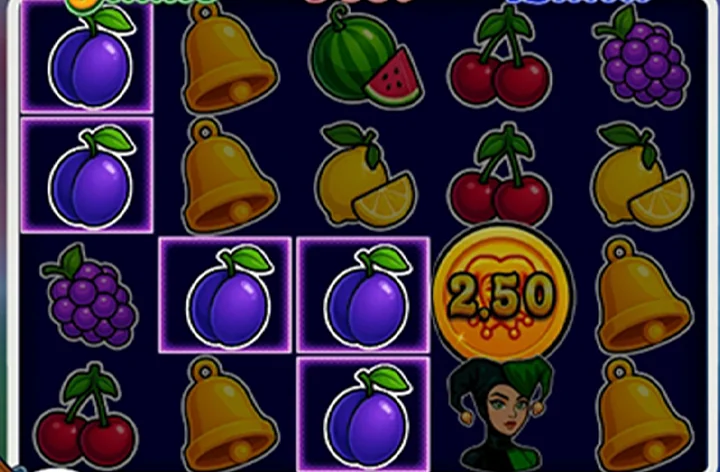
Special symbols change the performance
ACT 06

Reading Motion Without Losing the Result

Pin, Win, Pile, Collector, Wild and Instant Pays create several kinds of reel interaction. A pin effect emphasizes persistence, direct-win or instant-pay symbols communicate immediate value, pile behaviour builds a grouped result, and collector logic links visible values to a dedicated collection event. Wild symbols provide the familiar substitution layer within the larger feature system.

For Pin, Win, Pile, Collector, Wild and Instant Pays, the important detail is visible in the stage hierarchy. The game’s identity comes from the relationship among characters, tokens and special symbols. Jinxie, Jest and Luna are not separate decorative mascots placed over unrelated mechanics. Their colour states organize token progress, their activation count defines the feature tier, and their tricks determine which special-symbol behaviours appear during Free Games or Triple Games.

ACT 07

Adapting the Stage for Touch Screens

Joker Tricks uses energetic light and character animation, but outcome feedback still needs its own visual priority. Symbol highlights, way evaluation, value movement and feature counters explain the current state. The stage can remain theatrical without forcing the user to infer whether a flash belongs to decoration, token progress or an evaluated result.

For Pin, Win, Pile, Collector, Wild and Instant Pays, the important detail is visible in the stage hierarchy. The visual structure separates the game into a performer layer and a reel layer. Jinxie, Jest and Luna occupy distinct colour-coded positions above the grid, while four rows and five reels handle symbols below. This arrangement allows character status to remain visible during ordinary outcomes and gives the interface a clear place to show token collection before a feature begins.

ACT 08

A Connected System Rather Than Isolated Bonuses

Responsive presentation compresses the scenery before it compresses the practical interface. In portrait mode, character panels remain above the grid and controls sit below or beside it within thumb reach. Landscape mode gives all five reels more horizontal room. Token colours, active abilities and current values retain the same meaning in either orientation.

For Pin, Win, Pile, Collector, Wild and Instant Pays, the important detail is visible in the stage hierarchy. A 4×5 grid provides twenty visible symbol positions and 1024 ways. The wider symbol field supports persistent, collecting and value-based effects without requiring the character portraits to overlap the reel area. Result animation can emphasize participating positions, then return the screen to a neutral state where the next token or performer change is easy to identify.

Joker Tricks neon theatre and character-led bonus screen
All three performers share the stage
Joker Tricks Triple Games with all three performers active

TRIPLE GAMES

Wake all three performers

Feature scale depends on how many performers wake. One active character begins Free Games around one trick. Two characters mix their abilities, creating a combined sequence. When all three activate together, Triple Games brings every special symbol system onto the stage. The progression is easy to describe because performer count directly changes feature complexity.

PLAY JOKER TRICKS

QUICK REFERENCE

Joker Tricks product facts

ProductJoker Tricks
StudioAmigo Gaming
FormatVideo slot
Page focusJoker Tricks Symbols: Pin, Win, Pile and Collector
Key elementsNeon performance stage and joker features
Device presentationResponsive desktop and mobile layout

FAQ

Joker Tricks questions

Joker Tricks is an Amigo Gaming online slot set on a neon performance stage. Three characters, token collection and several special-symbol behaviours drive its feature structure.

The screen uses four rows and five reels. The three performer panels sit above this grid so their status can remain visible. Each performer commands a colour and gathers associated tokens. The interface can communicate progress through illumination, movement and the change from a dormant portrait to an active performance. Because each colour belongs to one character, the user can connect a reel event with Jinxie, Jest or Luna before the feature transition is complete.

The game lists 1024 ways. Symbol evaluation takes place across the 4×5 field rather than through a small set of fixed line drawings.

The official profile describes volatility as medium-high, indicating the intended mathematical rhythm of the game. Pin, Win, Pile, Collector, Wild and Instant Pays create several kinds of reel interaction. A pin effect emphasizes persistence, direct-win or instant-pay symbols communicate immediate value, pile behaviour builds a grouped result, and collector logic links visible values to a dedicated collection event. Wild symbols provide the familiar substitution layer within the larger feature system.

The stated maximum multiplier is x1800. The live game rules and current interface remain the place to verify how any specific result is calculated.

Jinxie, Jest and Luna are the three mysterious performers. Each owns a colour, collects tokens and connects to an individual trick. Responsive presentation compresses the scenery before it compresses the practical interface. In portrait mode, character panels remain above the grid and controls sit below or beside it within thumb reach. Landscape mode gives all five reels more horizontal room. Token colours, active abilities and current values retain the same meaning in either orientation.

Waking one character starts Free Games with that performer’s special behaviour active.

When two wake together, their tricks are mixed in the same Free Games sequence. The visual structure separates the game into a performer layer and a reel layer. Jinxie, Jest and Luna occupy distinct colour-coded positions above the grid, while four rows and five reels handle symbols below. This arrangement allows character status to remain visible during ordinary outcomes and gives the interface a clear place to show token collection before a feature begins.

Triple Games starts when Jinxie, Jest and Luna wake at the same time, bringing every special-symbol system into one bonus.

The feature list names Pin, Win, Pile, Collector, Wild and Instant Pays. Each performer commands a colour and gathers associated tokens. The interface can communicate progress through illumination, movement and the change from a dormant portrait to an active performance. Because each colour belongs to one character, the user can connect a reel event with Jinxie, Jest or Luna before the feature transition is complete.

Colour links a token or stage event to the corresponding performer and helps identify which ability is charging or active.

Yes. The 4×5 grid and three performer panels can be arranged for touch screens while retaining the same feature hierarchy. Pin, Win, Pile, Collector, Wild and Instant Pays create several kinds of reel interaction. A pin effect emphasizes persistence, direct-win or instant-pay symbols communicate immediate value, pile behaviour builds a grouped result, and collector logic links visible values to a dedicated collection event. Wild symbols provide the familiar substitution layer within the larger feature system.

Character illumination, token progress, counters and reel highlights distinguish the current ability, remaining sequence and evaluated outcome.